Bathroom Material Comparison Guide: Countertops, Flooring & Cabinetry
Most guides cover one material category at a time. This one puts countertops, flooring, and cabinetry side by side, because a real remodel means choosing all three together — and a few technical limitations (like which floors actually support heated flooring) only matter once you’re comparing across categories.
Why Material Choice Matters More Than Style
Two materials can look nearly identical in a showroom and perform completely differently in an actual bathroom. Porosity, water absorption, and how a surface handles everyday products — toothpaste, cleaning sprays, standing water — matter more to how a bathroom holds up over years than which finish trend is popular this year. This guide focuses on those real, practical differences.
Countertop Materials
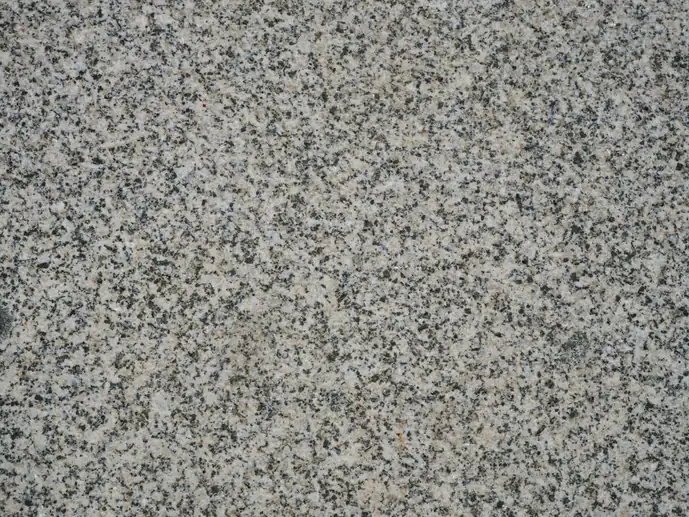
Quartz and solid surface are the two genuine low-maintenance leaders — both non-porous, neither ever needs sealing, and neither stains the way natural stone can. Granite is durable and handles heat well, but it’s porous and realistically needs resealing every 6 to 12 months to stay protected. Marble is the one material worth a real caution: it’s porous, needs annual sealing, and is genuinely vulnerable to etching from everyday acidic products — toothpaste included — which is why it’s best reserved for a powder room or low-traffic bathroom rather than a daily-use primary vanity. Quartzite splits the difference well: harder than granite, very durable, and stain-resistant, at a similar maintenance level to granite.
| Countertop Material | Sealing Needed | Best For |
|---|---|---|
| Quartz | Never | Daily-use vanities, low maintenance priority |
| Solid surface | Never | Hygiene-focused households, seamless look |
| Quartzite | Occasional (durable between sealings) | Natural-stone look with better durability than granite |
| Granite | Every 6 – 12 months | Heat resistance, natural stone pattern variety |
| Marble | Annually, and careful product use | Powder rooms and low-traffic bathrooms specifically — not a daily primary vanity |
Flooring: Tile vs. LVP, and the Heated-Floor Question
Porcelain tile remains the gold standard for bathroom flooring durability and resale value — fired above 2,200°F, its water absorption rate runs below 0.5%, effectively waterproof on its own. Luxury vinyl plank (LVP) is the fastest-growing bathroom flooring choice for good reason: it’s genuinely warmer underfoot than tile, costs less, and the plank material itself is waterproof. One real caveat worth knowing before you choose it: the plank being waterproof isn’t the same as the whole floor assembly being sealed — the perimeter and around fixtures still need proper silicone sealing.
The genuinely important distinction if you’re planning radiant heated flooring: tile and natural stone are effectively the only options for true radiant heat systems. LVP is only rated for low-temperature radiant heat, capped around 85°F — noticeably less warmth than a tile floor on a full radiant system can deliver. If heated floors are part of the plan, that alone can settle the tile-vs-LVP decision before cost or style even enter the conversation.
| Flooring Material | Cost, Installed | Heated Floor Compatible? |
|---|---|---|
| Vinyl sheet | $2 – $6/sq ft | No |
| LVP (luxury vinyl plank) | $4 – $12/sq ft | Low-temp only, capped ~85°F |
| Porcelain tile | $7 – $20/sq ft | Yes — full radiant heat compatible |
| Natural stone | $10 – $30/sq ft | Yes, though tile is the more common choice for heated systems |
A real 2026 trend worth knowing: many homeowners are choosing large-format tile (24×48″) specifically to reduce the number of visible grout lines on the floor.
Cabinetry & Vanity Materials
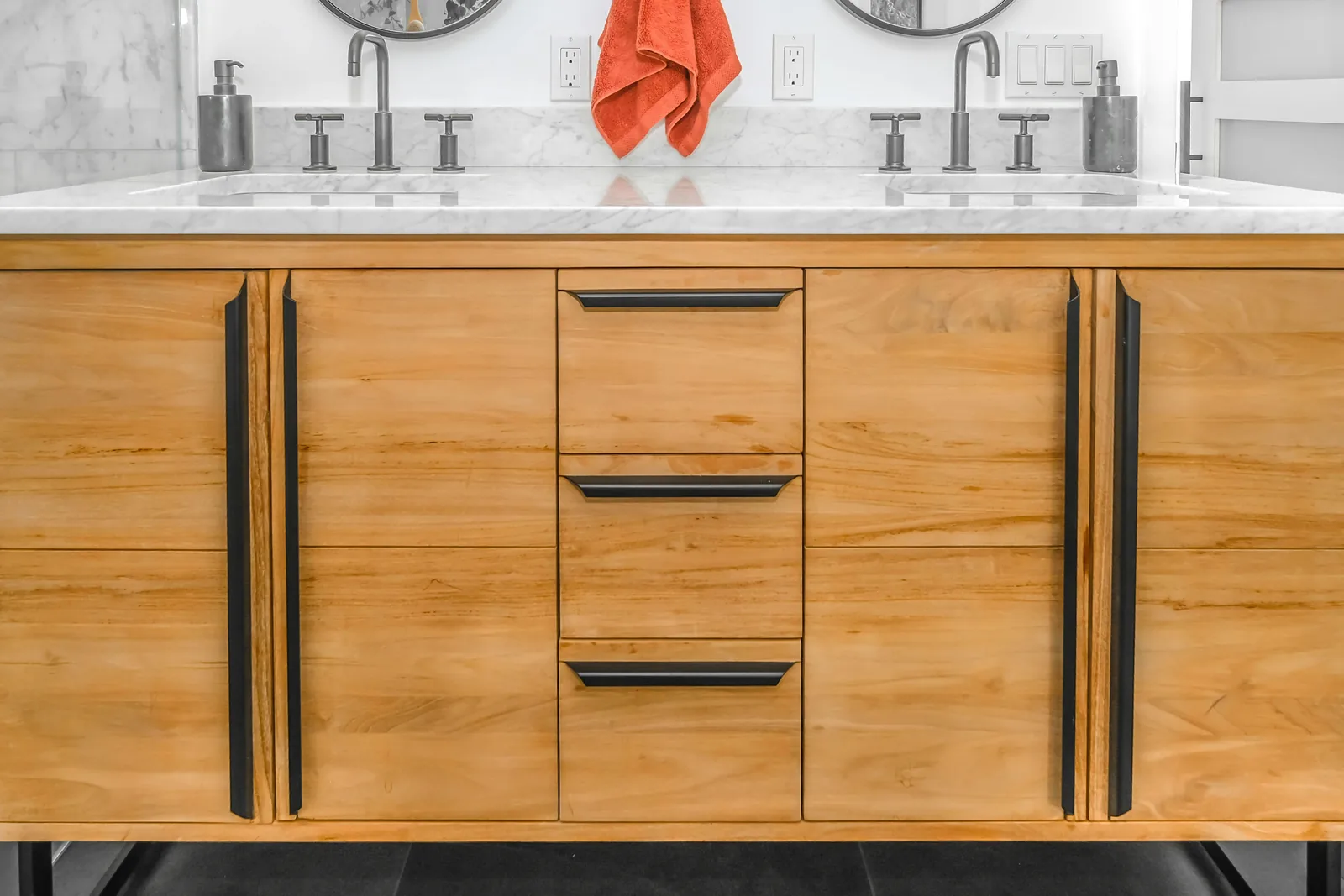
Solid wood is genuinely durable, but it expands and contracts with bathroom humidity over time unless it’s properly finished with a real water-resistant coating — a detail worth confirming rather than assuming. Cabinet-grade or marine-grade plywood is a real, often-overlooked alternative: it offers better actual moisture resistance than solid wood at a comparable price tier, a genuinely useful fact most consumer guides skip in favor of a blanket “wood is good” recommendation. MDF alone doesn’t hold up as well to bathroom humidity, but it performs perfectly well as a core material when paired with a properly sealed laminate or thermofoil finish covering every edge. Thermofoil itself — MDF or particleboard vacuum-sealed in a plastic coating — handles moderate humidity well with reasonable ventilation and realistically lasts 10 to 15 years.
Tile: See Our Dedicated Comparison
Tile deserves its own detailed cost breakdown, which already exists on this site rather than being repeated here: ceramic runs $3 to $10 per sq ft, porcelain $7 to $14, large-format porcelain $15 to $30, and natural stone $18 to $35+ — see the full tile comparison on our Full Bathroom Remodel page → for the complete breakdown, including why tile choice alone can move a project’s total cost by thousands of dollars.
How to Actually Coordinate These Choices
Choosing all four categories at once can feel overwhelming, but there’s a real, practical sequence that works: pick the vanity countertop first, since it’s usually the hardest material to change later and everything else can be selected to work with it. Tile and paint come next, chosen to complement the countertop rather than compete with it. Fixtures and cabinetry hardware come last, once the bigger surfaces are locked in — small decisions are far easier to make around big ones already settled than the other way around. Bellevue’s genuinely soft water (roughly 1.2 to 1.5 grains per gallon) is a real, if secondary, factor worth knowing while you decide: it means measurably less mineral buildup on any surface here than in a hard-water market, which takes a little pressure off the sealing-interval decision for porous materials like granite, without eliminating the need for it entirely.
Questions About Bathroom Materials
What’s the best bathroom countertop material?
Quartz and solid surface are the best all-around choices for most households — both are non-porous and never need sealing. Marble looks distinctive but is genuinely high-maintenance and best kept to a powder room rather than a daily-use vanity.
Is LVP or tile better for a bathroom floor?
Both are genuinely good, waterproof options. Tile remains the durability and resale-value leader and is the only real choice if you want radiant heated flooring; LVP is warmer underfoot, costs less, and is compatible with low-temperature radiant heat only.
Can I put heated flooring under LVP?
Only low-temperature radiant heat, capped around 85°F. For a full radiant heat system, tile or natural stone is the real option — worth deciding before you choose flooring, not after.
What’s the best material for a bathroom vanity in a humid bathroom?
Cabinet-grade or marine-grade plywood genuinely offers better moisture resistance than solid wood at a similar price point. MDF works fine as a core material when it’s fully sealed with laminate or thermofoil on every edge.
Ready to Talk Materials With a Real Contractor?
We match you with a vetted, licensed Bellevue-area contractor for free — they can walk you through what actually works for your specific bathroom.