Bathroom Maintenance & Care Guide for Bellevue, WA
A remodeled bathroom holds up as long as its maintenance schedule does — and Western Washington’s damp climate asks more of that schedule than most national advice accounts for. This guide covers what actually needs attention after a remodel: mold prevention, real exhaust-fan sizing, grout and caulk resealing, and which fixture finishes genuinely hold up over time.
Why Bellevue Bathrooms Need More Deliberate Care
Western Washington’s average outdoor humidity often reaches around 80% — genuinely higher than most of the country — which means a Bellevue bathroom doesn’t dry out passively the way one would in a drier climate. The EPA recommends keeping indoor humidity between 30% and 50%; left unmanaged, a PNW bathroom sits well above that range for hours after every shower. That’s not a reason to worry, but it is a real, specific reason the maintenance habits below matter more here than generic national advice assumes.
This matters more, not less, right after a remodel. New grout and caulk are actually at their most vulnerable in the first few months — they haven’t fully cured, and a homeowner who just spent real money on new finishes is often (understandably) using bleach-heavy all-purpose cleaners out of habit, which can break down sealants faster than a material-appropriate cleaner would. A few weeks of deliberate care right after the work is done sets the tone for how long everything else on this page actually holds up.
Mold & Mildew Prevention
The single most effective habit is also the simplest: run the exhaust fan during the shower and for at least 20 minutes after — most mold growth starts in the window right after the room feels “done” being used, not during. Leaving the shower door or curtain open afterward lets trapped moisture evaporate instead of sitting against glass and grout. A compact bathroom-specific dehumidifier is worth considering in a windowless bathroom, or any bathroom where the fan alone isn’t keeping up in winter. Routine cleaning matters as much as ventilation — soap residue and organic matter in grout lines, corners, and around fixture bases is literally what mold feeds on, so a weekly wipe-down of those specific spots does more than an occasional deep clean of the whole room.
Cleaning product choice matters more than most people assume. Harsh, bleach-based cleaners used on every surface can actually break down grout sealant and silicone caulk faster than they prevent mold — a pH-neutral bathroom cleaner for everyday wiping, reserving anything bleach-based for an occasional deeper clean on tile and grout specifically (never directly on caulk or natural stone), protects the sealants you’re relying on to keep water out in the first place.
Exhaust Fan Sizing: What CFM Do You Actually Need
Washington’s building code (IRC Section R303.3) sets a floor, not a target: every bathroom needs a mechanical exhaust fan rated at least 50 CFM intermittent or 20 CFM continuous, per ASHRAE 62.2 standards. But code minimums and correctly-sized fans aren’t always the same thing, especially in a larger primary bathroom. The real sizing formula: CFM = room volume (length × width × ceiling height, in cubic feet) ÷ air changes per hour ÷ 60. A simpler rule of thumb gets you close without the math: 1 CFM per square foot of floor area, with a 10–20% margin added for duct bends and friction loss — and never below the 50 CFM code floor regardless of how small the room is.
| Bathroom Size | Approx. Sq Ft | Recommended CFM |
|---|---|---|
| Small (powder room, ¾ bath) | 20 – 40 sq ft | 50 CFM (code minimum applies) |
| Standard full bathroom | 40 – 65 sq ft | 50 – 65 CFM |
| Large primary bathroom | 65 – 100 sq ft | 65 – 100 CFM |
| Primary bathroom with separate water closet or steam shower | 100+ sq ft | 100 CFM+, or a second fan zoned to the enclosed area |
Figures use the 1 CFM per sq ft rule of thumb plus the 50 CFM code floor — a fan sized for your exact room, not just “whatever came with the remodel,” is one of the most overlooked details in a bathroom project.
Grout & Caulk: How Often to Reseal
Resealing schedules genuinely vary by how often a bathroom gets used and how humid the space runs, which is why sources disagree — the ranges below reconcile that variation into one usable table. A quick, real test beats calendar-guessing either way: drip water directly on a grout line. If it beads up, the seal is still holding. If it soaks in, reseal now, regardless of how long it’s been.
| Surface | Typical Interval | Notes |
|---|---|---|
| Shower/tub grout, daily-use bathroom | 6 – 12 months | High humidity + frequent use shortens the real interval |
| Shower/tub grout, typical use | 12 – 18 months | The realistic default for most primary bathrooms |
| Shower/tub grout, guest bathroom | Up to 2 years | Infrequent use genuinely extends the interval |
| Floor tile grout | 2 – 3 years | Lower moisture exposure than shower walls |
| Tub/shower enclosure caulk | 3 – 5 years | Replace at the first sign of cracking, gapping, or discoloration — don’t wait for the interval if it’s visibly failing |
Shower Doors & Glass: Keeping Hard-Water Buildup Off
Bellevue’s water is genuinely soft — roughly 1.2 to 1.5 grains per gallon, sourced from the protected Cedar and Tolt River watersheds — which means real, measurably less mineral buildup on glass and fixtures here than in most U.S. markets. That’s a genuine local advantage, not a reason to skip maintenance entirely: a quick squeegee or dry wipe of the glass and door track after each shower prevents both water spots and the mold that trapped moisture in a track can encourage. Deep-clean the tracks roughly every two weeks with a soft brush and a vinegar-and-water rinse, and an occasional silicone spray on the rollers keeps a sliding door moving smoothly rather than sticking or grinding over time.

Which Fixture Finish Actually Holds Up
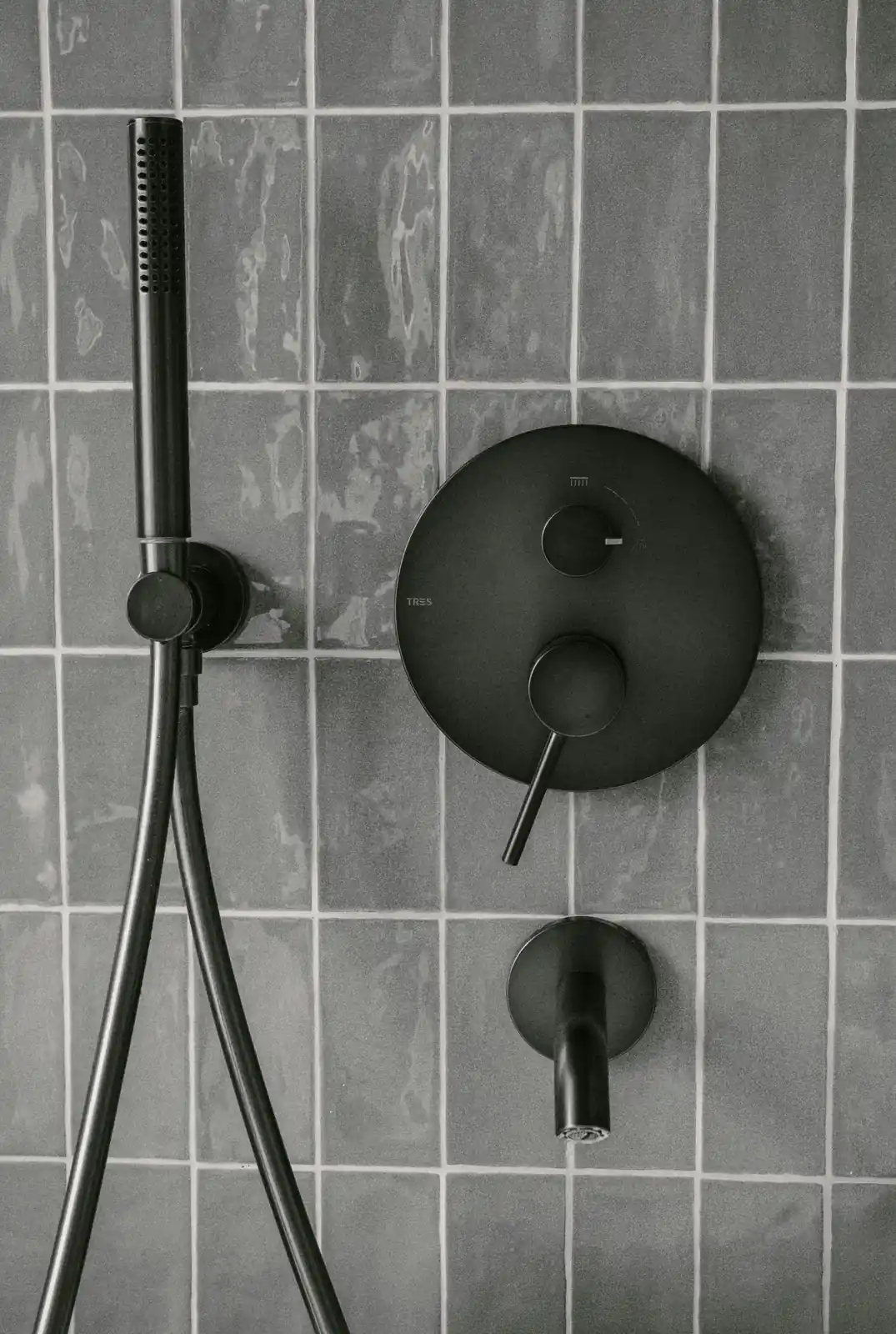
What determines a finish’s real longevity isn’t the color or style — it’s whether it’s genuinely PVD-coated (Physical Vapor Deposition) or a cheaper paint-on coating, a distinction that isn’t always obvious from a product listing alone. Genuine PVD finishes commonly carry lifetime warranties and realistically hold up 20+ years; a paint-on imitation finish can start flaking within a year of normal use.
| Finish | Durability | Day-to-Day Maintenance |
|---|---|---|
| Polished chrome | Most durable overall; resists tarnish and corrosion well | Shows fingerprints and water spots most visibly of any finish |
| Polished/satin nickel | Excellent when genuinely PVD-coated; comparable to chrome | Satin texture hides minor marks better than a polished surface |
| Brushed nickel | Durability depends heavily on plating quality — thin entry-level plating can wear within a few years | Textured surface hides water spots and fingerprints well |
| Matte black | Genuinely durable when true PVD-over-chrome/nickel, not paint-on | Hides fingerprints well, but hard-water mineral spots show up more against the dark surface |
| Champagne bronze | Comparable to brushed nickel when PVD-coated | Easiest finish to keep looking clean day to day — mid-tone color hides marks best |
If you’re choosing fixtures for an upcoming remodel rather than maintaining existing ones, ask specifically whether a finish is PVD-coated — it’s the single question that predicts real long-term durability better than the finish name alone.
Seasonal Adjustments Worth Knowing
Bellevue’s wet season (roughly October through April) is when bathroom humidity control matters most — running the exhaust fan longer after each shower and checking grout/caulk more frequently during these months catches problems before they set in, rather than discovering them in spring. In drier summer months, ventilation needs typically ease off, but it’s still worth a seasonal walk-through: check for any caulk that cracked over winter, confirm the fan is still moving air effectively (a simple tissue-paper test at the vent cover works), and reseal grout on schedule rather than pushing it to the following winter.
Questions About Bathroom Maintenance
How do I stop mold from growing in my Bellevue bathroom?
Run the exhaust fan during and at least 20 minutes after every shower, leave the shower door or curtain open to let moisture evaporate, and clean grout lines and fixture bases weekly — that combination addresses both the humidity and the organic residue mold actually needs to grow.
What size exhaust fan do I actually need?
Washington code requires at least 50 CFM intermittent or 20 CFM continuous. For proper sizing beyond the code floor, use roughly 1 CFM per square foot of bathroom floor area, with a 10–20% margin added — see the table above for real numbers by room size.
How often should I reseal grout and re-caulk?
Shower grout every 12–18 months (more often with daily use), floor grout every 2–3 years, and enclosure caulk every 3–5 years. A real test beats guessing: if water beads on a grout line instead of soaking in, it’s still sealed.
Which fixture finish holds up best over time?
Whether it’s genuinely PVD-coated matters more than the color itself. Polished chrome is the most durable overall; brushed nickel and champagne bronze are the easiest to keep looking clean day to day since they hide water spots and minor marks well.
Does Bellevue’s water make bathroom maintenance easier?
Yes, genuinely — Bellevue’s water is soft (roughly 1.2–1.5 grains per gallon), which means real, measurably less mineral buildup on glass and fixtures than in most U.S. markets. It reduces hard-water maintenance, but doesn’t eliminate the need for humidity and grout care.
Is a new remodel more vulnerable to damage than an older bathroom?
In the first few months, yes — new grout and caulk haven’t fully cured yet, and it’s easy to default to harsh all-purpose cleaners out of habit right after a remodel, which can break down fresh sealant faster than a material-appropriate cleaner would. A few deliberate weeks of care after the work is done protects the investment for years afterward.
Planning a Remodel Instead of Maintaining an Existing One?
We match you with a vetted, licensed Bellevue-area contractor for free — no obligation, no sales pressure.